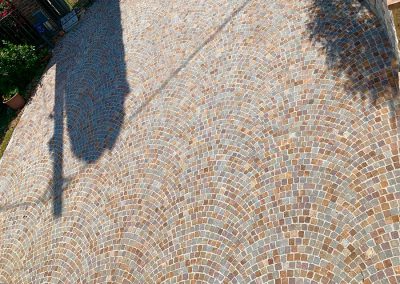
Flooring
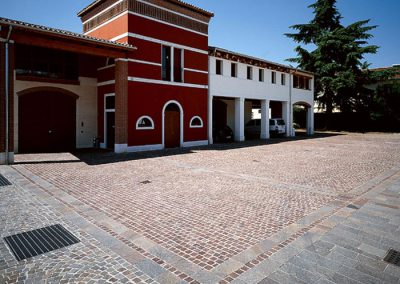
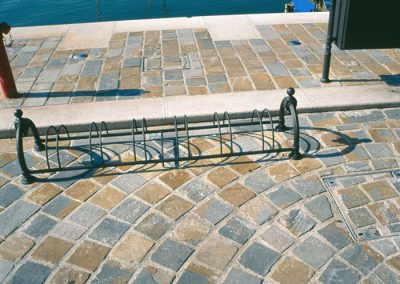
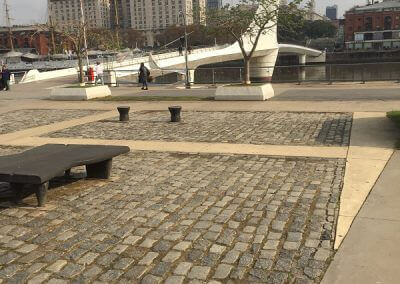
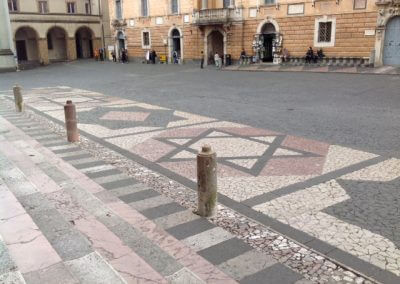
Le stones have been widely used since ancient times in the construction of buildings and roads, today they are used for their beauty, strength and durability in thestreet furniture either of historic centers which areas residential, in the coverings of buildingsi or in the landscaping.
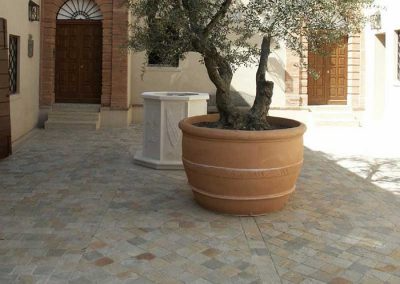
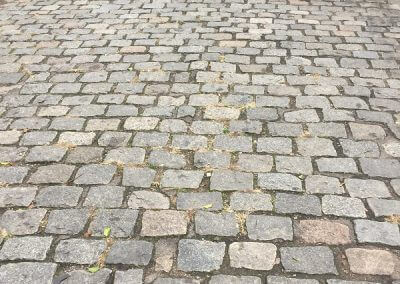
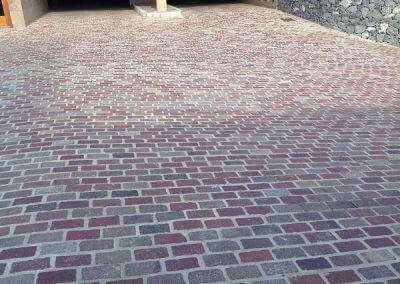
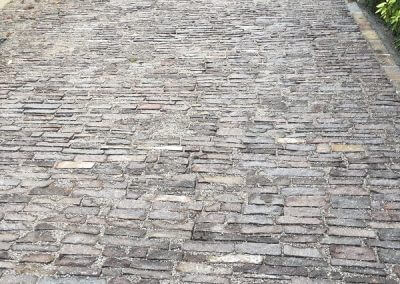
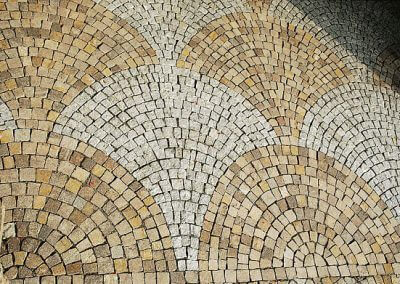
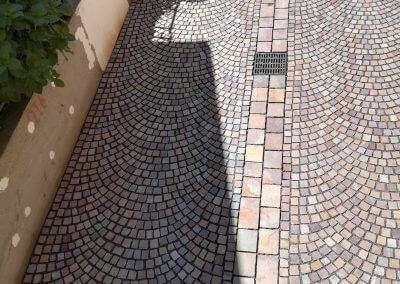
There are different types of pavements, and a classification of them can be made according to the geometric characterization of the elements that make them. We can summarize them into three categories: pavements, flagstones and cobblestones.
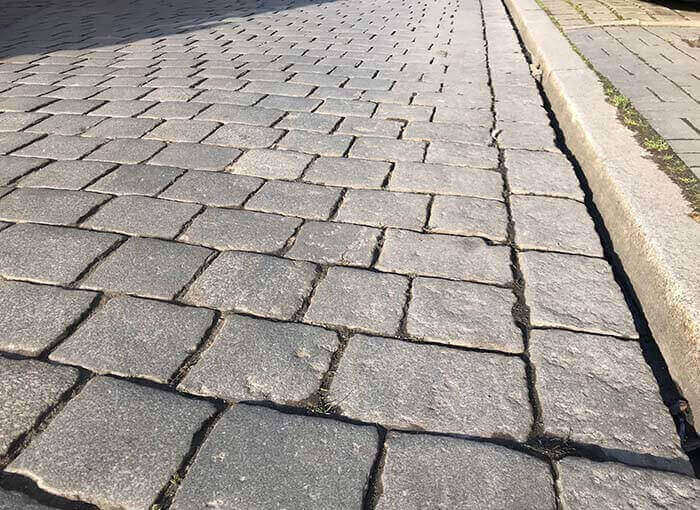
The elements for the realization of the pavements are obtained by mechanical splitting of stone slabs. Depending on the geometry, the building elements take on different designations such as. cubes, binders, boulders, smollers.
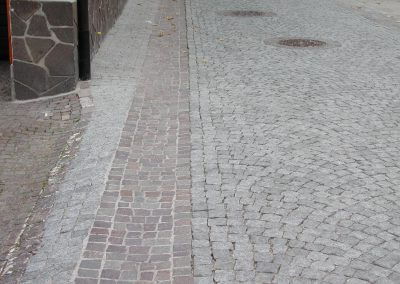
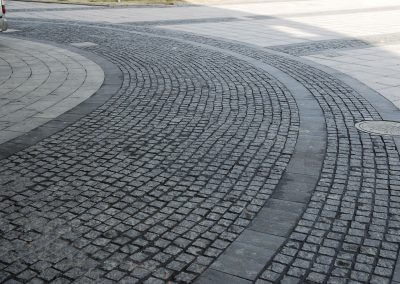
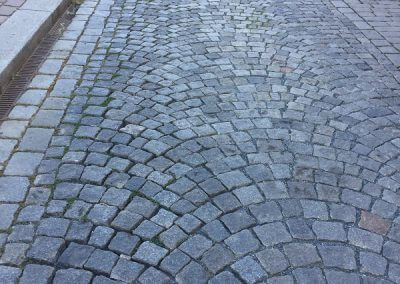
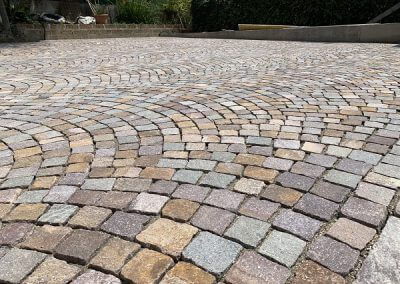
I cubes are cubic in shape with faces that are not orthogonal to each other and are obtained mainly by splitting very hard stones such as granite, basalt, porphyry, diabase, diorite and other hard stones.
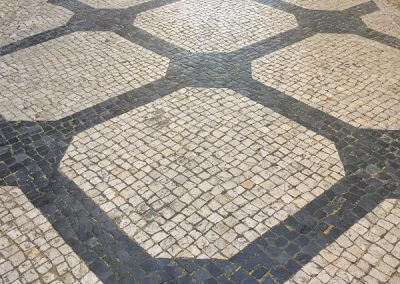
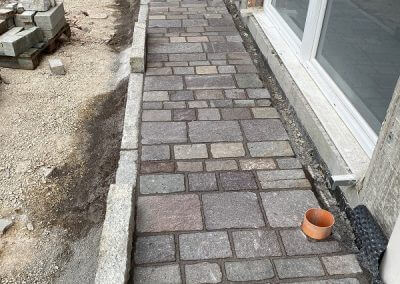
The bindings, screeds, and smollers are parallelepiped-shaped elements and are used either as paving and boundary edges or to achieve specific designs.
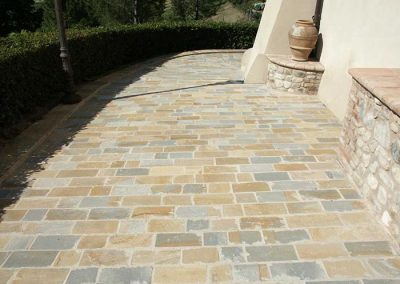
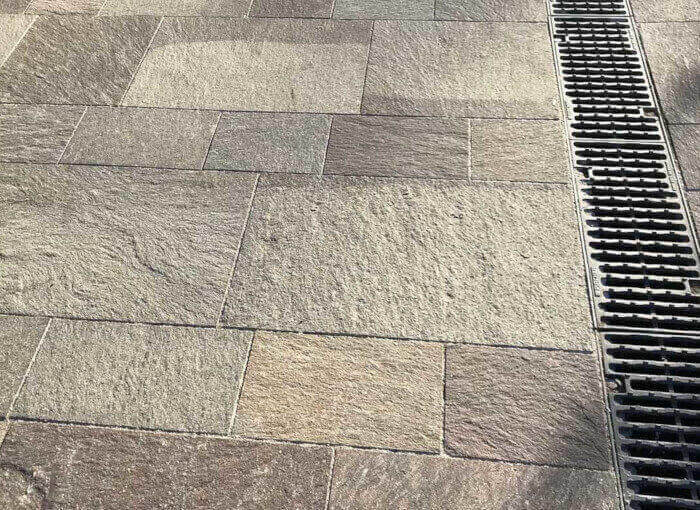
We talk about pavement when the pavement consists of two-dimensional elements with a thickness much less than the width and length of the element itself. Paving slabs can be produced from all types of stone, including limestone, granite, slate, basalt, travertine, porphyry, and sandstone.
Le Slabs of granite, porphyry, basalt, diorite, and other hard stones have high abrasion resistance and are suitable for both pedestrian and vehicular traffic areas. The Slabs of limestone, sandstone, travertine etc., are suitable for paving pedestrian areas and require periodic maintenance.
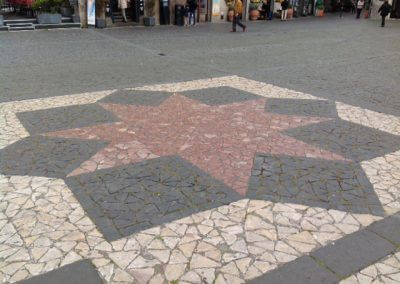
The cobblestones are pavements generally made from river or alluvial pebbles and do not have a well-defined geometry. Thanks to the splitting technology produced by Steinex Ltd. the pebbles can be sheared in half thus obtaining elements with a sheared surface that is easier to walk on.
Le pavements are almost always completed with stone kerbs that give physical or visual delineation and at the same time containment. They are indispensable elements for the construction of sidewalks, containment of flower beds and delineation of driveways. They can be produced by splitting rough stones or sawn stones.
These applications are achieved with these machines: